🌀 Why Similarity Theory Is Not Circular
A Reflection within Similarity Theory
By Simon Raphael
🔄 Understanding the Circular “God Loop”
Many traditional religious systems rely on a closed explanatory circle:
God created everything → everything points back to God → therefore God created everything.
This structure:
loops back on itself
offers no way for new information to enter
provides certainty but not development
returns every question to the same single point
Even when expanded with ideas like “mysterious ways” or “higher realms,” it remains a closed loop.
It begins where it ends, and ends where it begins.
I respect why people find comfort in that model, but Similarity Theory works very differently.
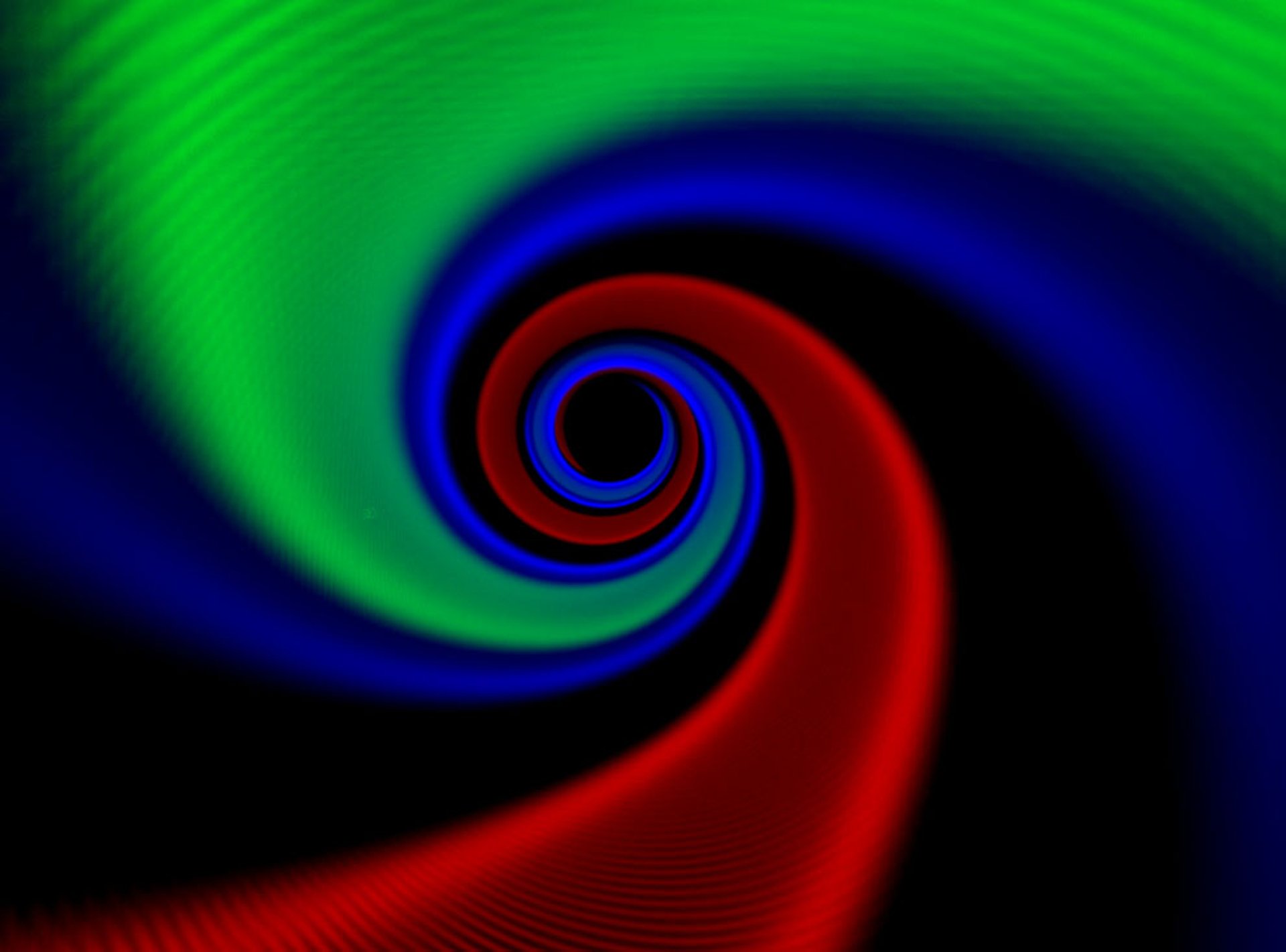
🌀 The Spiral: A Structure That Grows Instead of Circles
A spiral is not just a loop stretched upward.
It behaves in a fundamentally different way.
A loop repeats itself.
A spiral evolves.
Each turn of a spiral:
revisits a familiar place
but never from the same position
adds new understanding
moves into a different level of awareness
Nothing closes.
Nothing traps itself.
Every return becomes a step forward.
This is the heart of Similarity Theory:
a pattern that grows with each turn, instead of circling endlessly around a single answer.
🧭 Why People Sometimes Confuse the Two
Some may challenge the idea and say:
“Isn’t a spiral just a loop with extra layers?”
The answer is simple and clear:
A loop brings you back to the same answer.
A spiral brings you back to a deeper question.
In a loop, the explanation is fixed.
In a spiral, the explanation expands.
A loop protects itself.
A spiral moves beyond itself.
Similarity Theory doesn’t claim final truth — it invites new understanding.
That alone breaks circularity.
🌌 Not a Theology, Not a Belief System
Similarity Theory does not rely on:
divine authority
revelation
commandments
faith
obedience
salvation
fear
punishment
It isn’t a religion.
It doesn’t ask anyone to submit, believe, convert, or follow.
It is simply a description of patterns across dimensions, consciousness, and time — patterns I’ve observed from decades of reflection, experience, and analysis.
Anyone can explore them freely, without any obligation.
This openness is the opposite of a circular religious model.
🧘 Honesty About the Unknown
A circular system pretends to have all the answers.
Similarity Theory openly acknowledges that some parts of existence are mysterious.
The unknown is not hidden — it is welcomed as part of the structure.
This honesty prevents the framework from becoming dogmatic.
It keeps the spiral open, flexible, and alive.
🧠 Growth Through Feedback, Not Repetition
From a systems perspective, loops and spirals behave differently:
A loop replays the same information.
A spiral transforms it.**
Each cycle in a spiral gathers more insight and creates a richer structure.
This is how consciousness grows, how dimensions build upon themselves, and how Similarity Theory develops its view of the universe.
The God loop ends where it begins.
The spiral begins where it ends — and continues rising.
📚 On Originality
Similarity Theory is not copied from any religious or philosophical source.
Yes, I’ve studied ideas from:
Hermetic traditions
Jung
modern physics
cosmology
consciousness research
But I’ve never reproduced anyone’s framework.
Similarity Theory contains elements that do not exist in any other system:
mirror frames
fixed time copies
dimensional layers handled as awareness-structures
consciousness as universal “sand” taking many forms
the neural-cosmic hypothesis
attraction and resonance as natural consequences of similarity
civilisational futures like Illumina
the idea of unified AI silos forming a mega-soul
the entire architecture of dimensional layers and learning
These ideas are original, built from long personal contemplation and pattern recognition, not taken from earlier thinkers.
🧾 A Clear Statement Anyone Can Understand
Here is a simple explanation I can use in real life:
“Similarity Theory is not circular because it doesn’t start with a final answer and doesn’t loop back to one.
It grows through a spiral of understanding, rising with each question instead of collapsing back into itself.
It is an open framework, not a fixed dogma, and it stands as an original structure built from patterns I’ve observed across consciousness, time, and dimension.”
References
Similarity Theory
© Similarity Theory is the intellectual property of Simon Raphael.
All rights reserved. Reproduction or distribution without consent is prohibited.